MUC1 Genetic Testing
A clinically validated assay service powered by Broad Clinical Labs
Understanding ADTKD
Autosomal dominant tubulointerstitial kidney disease is characterized by: (1) autosomal dominant inheritance, (2) bland urinary sediment (absence of blood or protein n the urine), and (3) chronic kidney disease with a mean age of requiring dialysis or transplant of approximately 45 years (range 20 to 80 years).
In 2013, Dr Eric Lander’s team at the Broad Institute analyzed samples provided by The Wake Forest Rare Inherited Kidney Disease Team led by Anthony Bleyer, MD and identified mutations in the MUC1 gene as a cause of ADTKD. Since then, over 2,500 individuals from 43 countries have undergone testing at the Broad Institute, with over 150 families in the US identified with ADTKD-MUC1. Dr. Bleyer’s team leads clinical research in ADTKD and has a large registry of families with ADTKD-MUC1. Dr. Anna Greka’s team is performing ground-breaking basic research in ADTKD at the Broad Institute. Together with other teams throughout the world, these groups are working to develop a treatment for ADTKD-MUC1.
ADTKD caused by MUC1 mutations (ADTKD-MUC1) is due to mutations in a segment of the MUC1 gene that is extremely difficult to analyze. Current commercially available multi-gene panels, whole exome sequencing, and whole genome sequencing do not detect MUC1 mutations. Therefore, patients with ADTKD and a negative gene panel have a high possibility of having MUC1 mutations.
In the United States, The Broad Institute of Harvard and MIT is the only entity providing clinically approved (CLIA-approved) genetic testing for the common mutations causing ADTKD-MUC1. Testing is free for individuals and families with ADTKD. Samples are collected through the Wake Forest Rare Inherited Kidney Disease team and sent to the Broad Institute for testing. Contact kidney@wakehealth.edu (see below).
Testing can also be performed on samples from other countries.
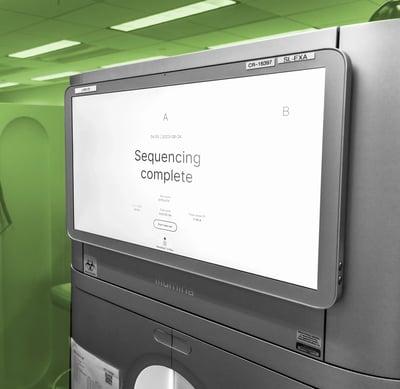
Reliable Detection of MUC1 Variants Can Reduce Diagnostic Uncertainty
Pathogenic variants (mutations) in the MUC1 gene are responsible for one of the most common forms of ADTKD. Commercial gene panels and gene sequencing do not identify the most common variants causing ADTKD-MUC1. This clinically validated test, built in partnership with Broad Clinical Labs and Wake Forest, is free and offers precise detection to support accurate diagnosis and management.
Understanding ADTKD-MUC1 for Patients
Autosomal dominant tubulointerstitial kidney disease has three main characteristics: (1) Many family members are often affected, with at least a parent and child affected with kidney disease. (2) There is no blood or protein in the urine. (3) Affected individuals have an elevated serum creatinine and develop progressive chronic kidney disease.
If you think that your family has this condition, please contact kidney@wakehealth.edu for more information and help determining if this could be the cause of kidney disease. All testing and evaluation is free.
For more resources on ADTKD, please visit www.rikd.org
For referring providers:
Give patients a clearer path forward with targeted genetic insights that inform care decisions.
98%
of cases are captured by the current Broad Clinical Labs Assay.
Here’s a look at how the process works:
MUC1 Genotyping Workflow

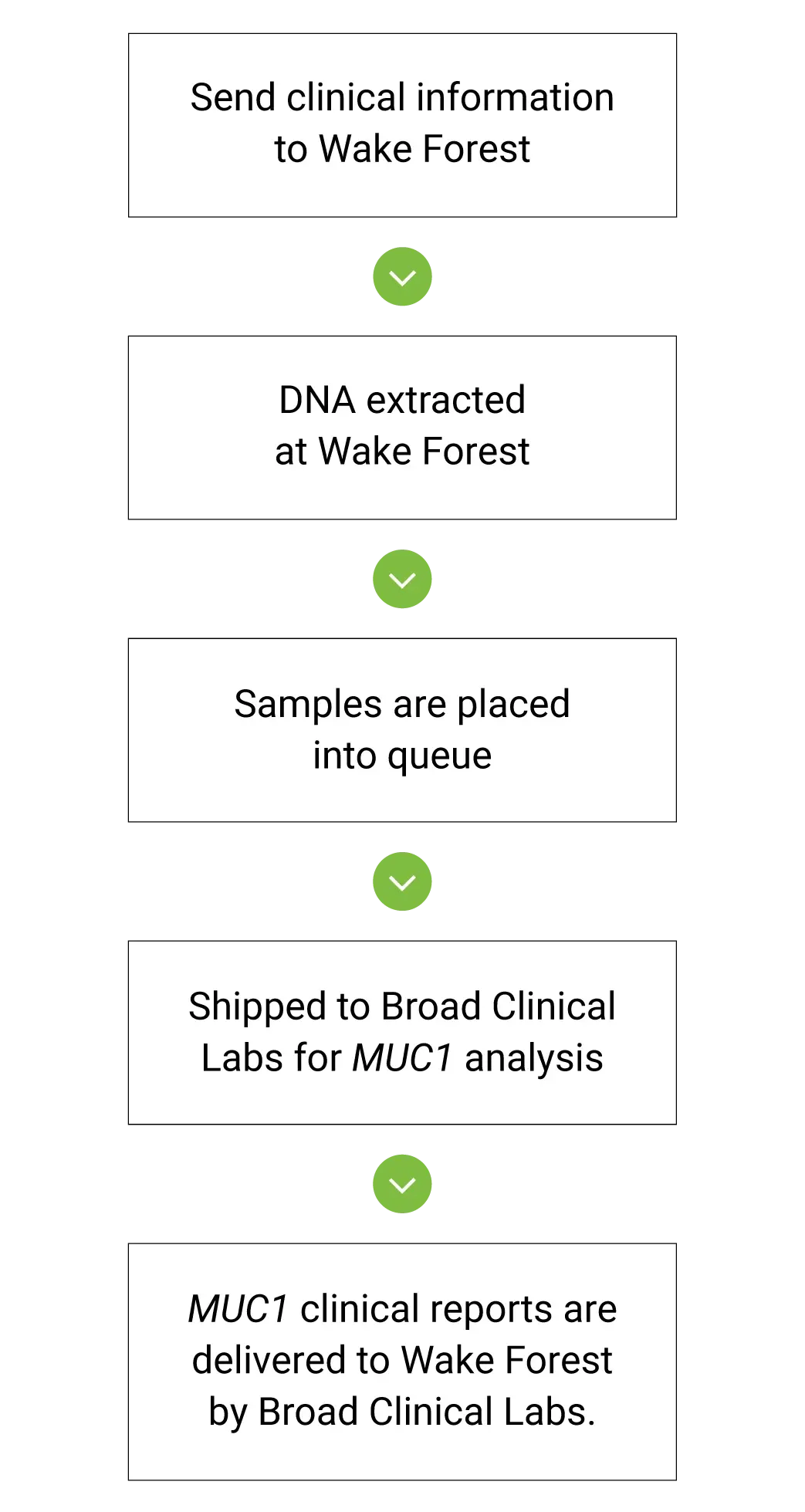
Patient Testing:
-
Patients interested in testing or health care providers should send an email request for testing with brief de-identified clinical information to kidney@wakehealth.edu
-
The Wake Forest team will discuss the case with you and strategize about which family members should be tested
-
The Wake Forest team will discuss test requirements and limitations and pre-genetic counseling
-
Initial email will receive a response within 2 days
Sample Requirements:
-
Sample Number
-
Family Number
-
4 μg of DNA required in case of retesting
-
DNA must be extracted from blood
-
Either DNA or a blood sample can be sent
Clinical Information Requirements:
-
Biological sex at birth
-
YOB
-
Age of ESRD — OR — last serum creatinine
-
*Asymptomatic individuals must have SCr value
-
Testing of children can only be performed after family receives pre-test counseling from a genetic counselor or pediatric nehprologist
-
Ordering providers assume responsibility for post-test genetic counseling
Shipping Information:
-
Batches are shipped every 8 weeks
-
Results may take 6–8 weeks to return
-
Any inconclusive samples are queued to be re-tested in the next batch
Interested in learning more?
Please contact the team at:
or
Anthony J. Bleyer, Sr., M.D., M.S. - Anthony.Bleyer@advocatehealth.org
Professor | Leader, Rare Inherited Kidney Disease Team | Section on Nephrology
Wake Forest School of Medicine
For patients
What can I expect from the MUC1 Sequencing test?


Thank you for contributing your sample.
When can I expect my results?
It can take up to four months for your sample to be fully processed.
Is there someone I can speak to if I have questions?
Please contact the team at:
Kendrah Kidd - Kendrah.Kidd@advocatehealth.org
Anthony J. Bleyer, Sr., M.D., M.S. - Anthony.Bleyer@advocatehealth.org
Professor | Leader, Rare Inherited Kidney Disease Team | Section on Nephrology
Wake Forest School of Medicine
Additional Resources on Understanding ADTKD
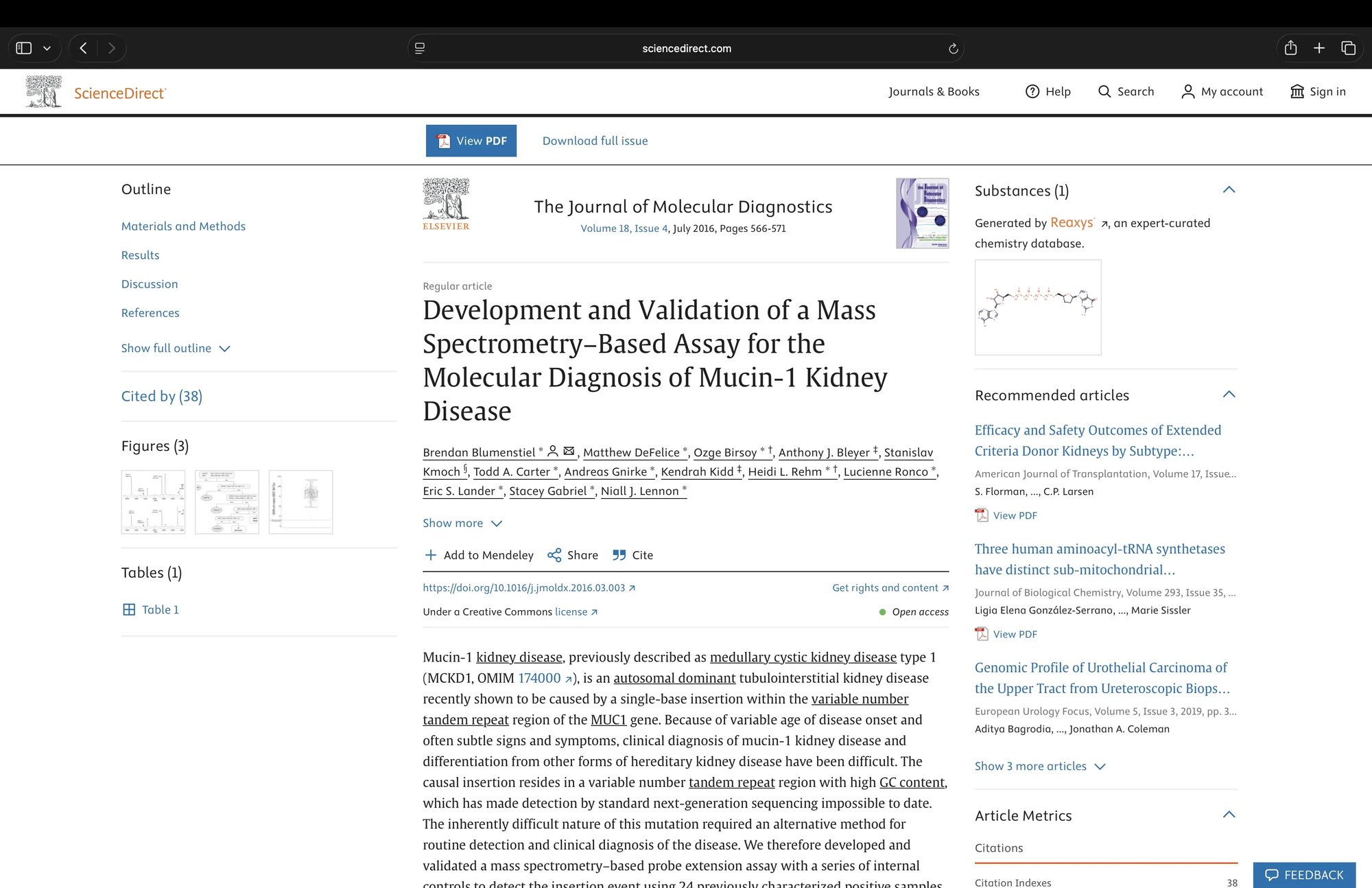
Contact Broad Clinical Labs to learn more about their customized clinical assay development services or sequencing needs.